On January 29 and 30, more than 380 students gathered at the University of Michigan to participate in the 2026 Leadership Crisis Challenge (LCC), an immersive, action-based learning experience hosted by the Sanger Leadership Center. Over the course of the simulation, students stepped into senior executive roles, navigating a fast-moving organizational crisis that required decisive leadership, clear communication, and collaboration under pressure.
Designed to mirror the complexity of real-world leadership, LCC challenges students to make high-stakes decisions with incomplete information, respond to evolving stakeholder demands, and articulate a clear strategy—all while receiving real-time feedback from experienced leaders.
Action-Based Learning, Grounded in the Michigan Model of Leadership
Rooted in the Michigan Model of Leadership, LCC gives students the opportunity to practice leadership in real time—where judgment, adaptability, and influence matter as much as analysis. This year’s case, centered on a technology-driven organization navigating risk amid rapid innovation, provided a relevant backdrop for developing leadership skills that are increasingly in demand across industries shaped by emerging technologies.
Throughout the challenge, students strengthened how they communicate within teams, navigate ambiguity, adapt to evolving circumstances, and influence others. Supported by feedback from judges, communication coaches, and peers, the experience reinforced a core principle of the Michigan Model: leadership is learned through action, reflection, and feedback.
Leadership in Action: Learning, Networking, and Perspective
In addition to the crisis simulation, students and volunteers connected during the Leadership in Action networking and learning sessions—designed to give participants space to step away from the case and engage in timely leadership conversations. These sessions brought together students, alumni, faculty, and industry leaders to explore topics tied to Michigan Model of Leadership skills, including conflict resolution, human-centered approaches to AI, influence in recruiting, and resilience in moments of crisis.
For students, the sessions offered meaningful opportunities to network with experienced leaders while gaining practical insights they could carry beyond the simulation. For volunteers, they provided a chance to engage directly with future leaders—sharing perspectives and contributing to conversations that extended learning beyond the competition itself.
Alumni and Community Engagement
LCC is made possible through the deep engagement of the University of Michigan community. This year, 89 alumni and faculty members served as members of the program’s Board of Directors, playing a central role in the simulation by questioning teams, evaluating strategy, and providing feedback. An additional 15 communication coaches supported student learning by offering targeted guidance on messaging and leadership presence throughout the challenge.
Reflecting on her role as a Board of Directors member, Marci Carris, former senior vice president of customer care at Sprint, shared, “LCC gives students the opportunity to work through a business crisis before they encounter one in their careers. Alumni involvement makes the simulation feel real—from the questions we ask in the boardroom to the feedback we share afterward. That realism is what makes the learning so impactful.”
The Leadership Crisis Challenge is generously sponsored by General Motors and McKinsey, whose support helps make this immersive, action-based learning experience possible for students.
First-Class Leadership: Our 2026 Winners
The challenge culminated with finalist teams presenting their strategies during a simulated press conference, fielding questions from members of the media and their Board of Directors. The winning teams demonstrated exceptional leadership presence, strategic clarity, and composure under pressure.
For many students, the experience underscored the value of collaboration under pressure. Mridul Aggrawal, MAcc ’26, shared, “LCC taught me the true meaning of synergy. We all brought different skills, experiences, and perspectives to the table, and learning how to leverage those differences made our success possible.”
Reflecting on the event, Nick Viviano, Sanger program manager, remarked, “The level of focus, collaboration, and leadership students demonstrated throughout the Challenge was impressive. They navigated complex decisions with confidence and care. I’m grateful to my team at Sanger and the many students and staff who helped bring this crisis simulation to life.”
Graduate winners: Energy Dryyvers
- Mridul Aggrawal, MAcc ’26
- Akshay Alse, WMBA ’27
- Akilandeshwari Balakrishnan, MM ’26
- Natthphop Lakdee, FTMBA ’26
- Caroline Powell, MAcc ’26
- Rasul Rahman, MSCM ’26
- Claire Taylor, MM ’26
Undergraduate winners: VictHERs
- Elena Bressa, BBA ’26 (RGI Exchange Student — Italy, University of Padova)
- Viveca Henry, BBA ’26
- Maria Papp, BBA ’26
- Anna Roson, BIEF ’26 (RGI Exchange Student — Italy, Bocconi University)
- Bizzy Webb, BBA ’26
- Sara Zubieta, BBA ’27
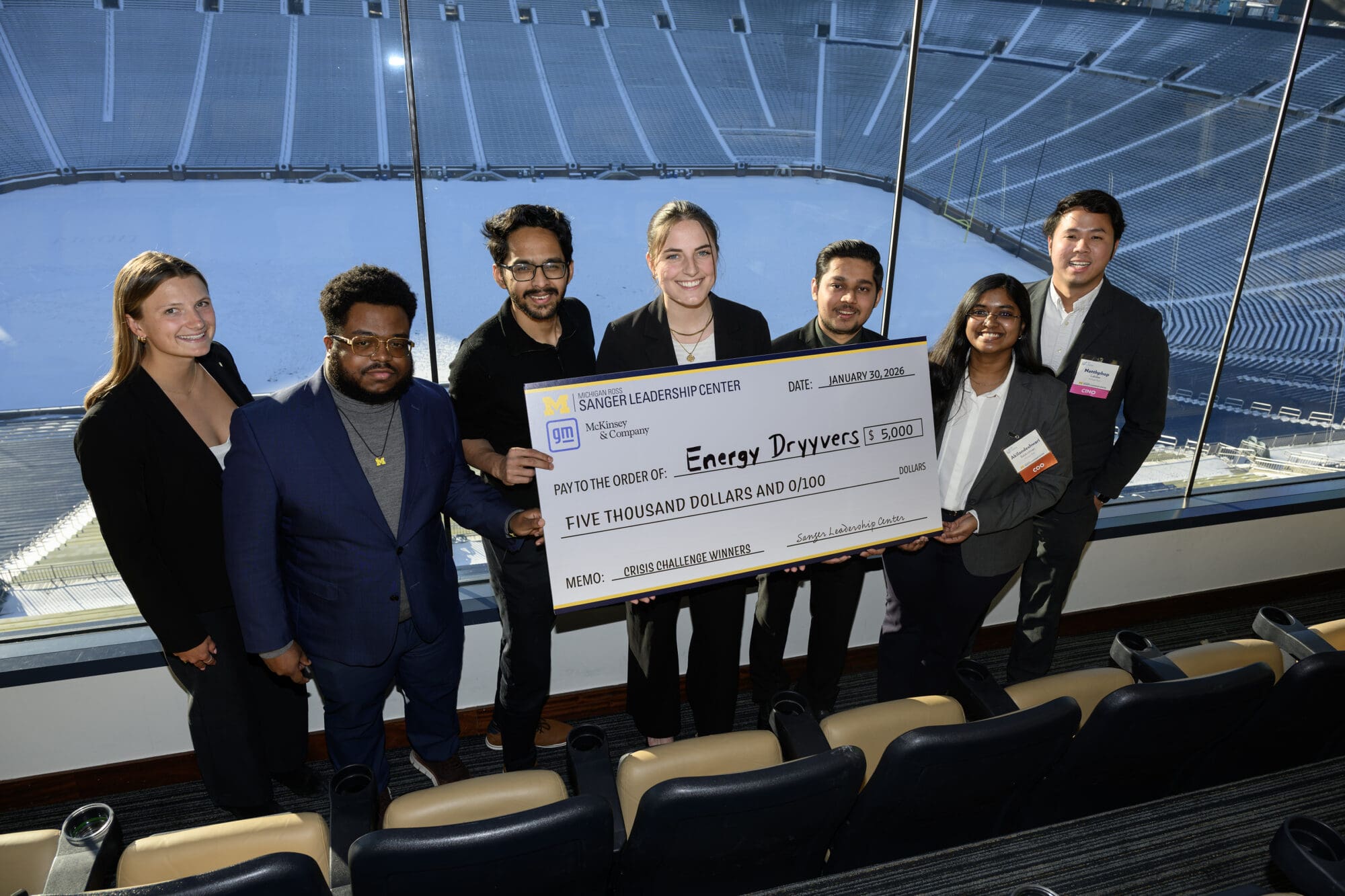
Graduate winners: Energy Dryyvers
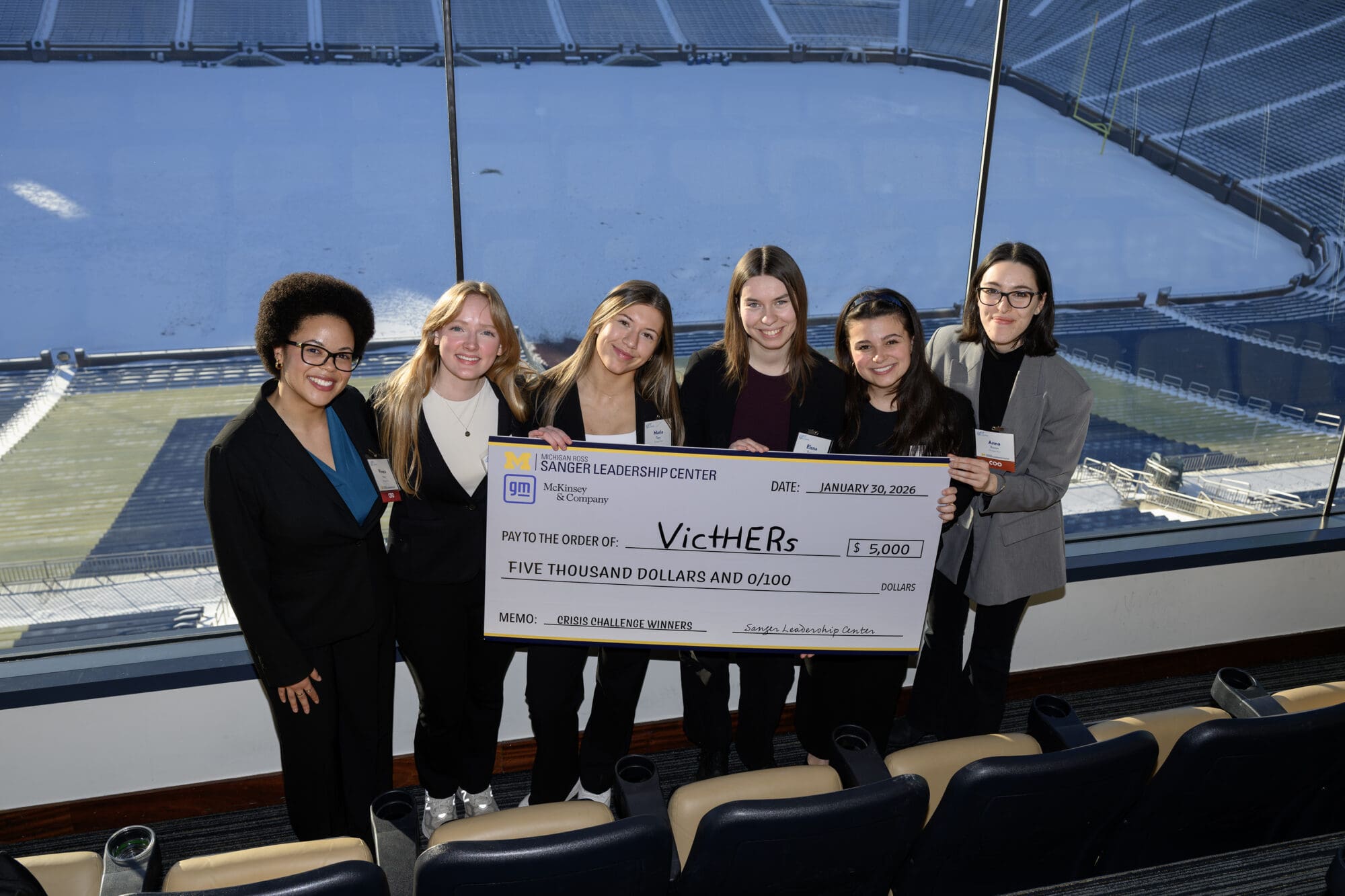
Undergraduate winners: VictHERs